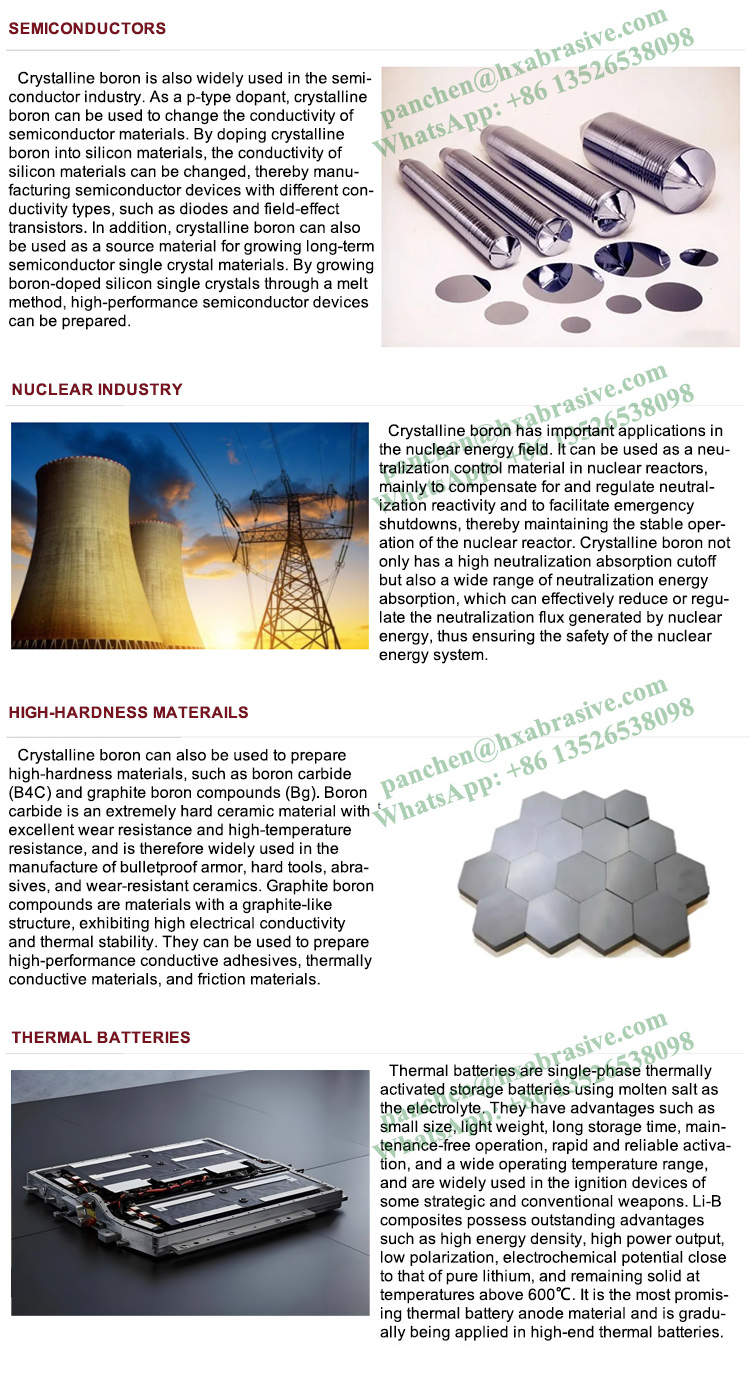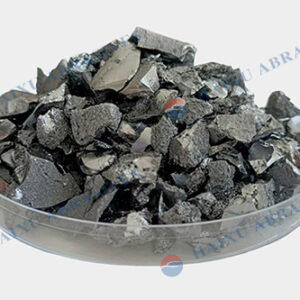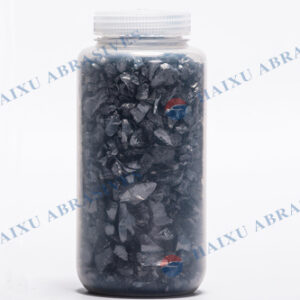
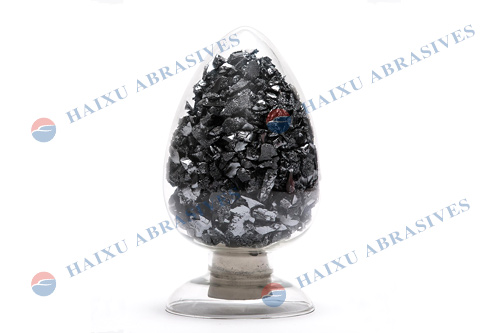
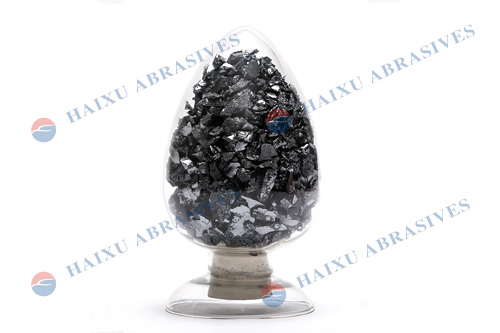
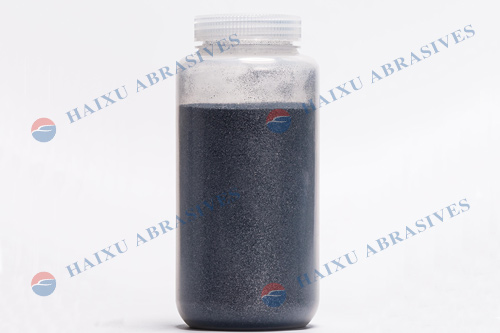
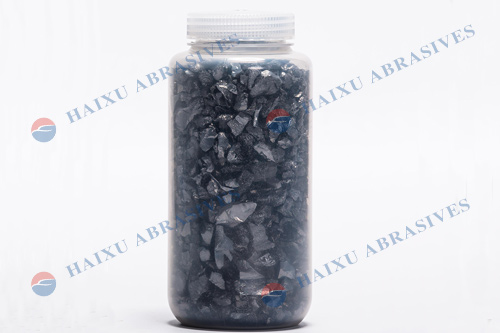
99,999% 99,9999% Gránulos de boro cristalino para dopantes de sílice
Los gránulos de boro cristalino al 99,999% para dopantes de obleas de sílice se utilizan ampliamente en la industria de semiconductores. Su densa estructura cristalina proporciona un rendimiento de dopaje estable con mínimos contaminantes volátiles durante el procesamiento a alta temperatura. Como material dopante de tipo p crítico, se aplica con precisión a la fabricación de obleas de silicio monocristalino para las industrias de semiconductores y fotovoltaica. El tamaño de partícula uniforme garantiza una difusión homogénea dentro de los sustratos de silicio, lo que ayuda a que las obleas obtengan una conductividad eléctrica estable.
Los estrictos controles de purificación reducen las impurezas metálicas y gaseosas a un nivel extremadamente bajo, cumpliendo plenamente con los altos estándares de producción de chips y células solares de última generación. Su formato granular de fácil flujo facilita la alimentación y garantiza una manipulación segura en los hornos de dopaje industriales.
Índice de productos:
| Fórmula molecular: | B |
| CAS | 7440-42-8 |
| Densidad | 2,3 g/cm³ |
| Fase | fase β-B |
| Punto de fusión | 2300°C |
| Punto de ebullición | 2550°C |
| Dureza de Mohs | >9 |
| Masa atómica relativa | 10.81 |
| Isótopos estables | 10B, 11B |
| Color | Gris oscuro, negro |
Composición química:
| Químico | 2N BORO CRISTALINO | 3N BORO CRISTALINO | 4N BORO CRISTALINO | BORNO CRISTALINO 5N | BORNO CRISTALINO 6N |
| B | ≥99% | ≥99,9% | ≥99,99% | ≥99,999% | ≥99,9999% |
| Fe | ≤500 ppm | ≤200 ppm | ≤90 ppm | ≤8 ppm | ≤0,5 ppm |
| En | ≤2,5 ppm | ≤0,08 ppm | ≤0,06 ppm | ≤0,02 ppm | ≤0,02 ppm |
| En | ≤1 ppm | ≤0,8 ppm | ≤0,3 ppm | ≤0,03 ppm | ≤0,03 ppm |
| Con | ≤12 ppm | ≤10 ppm | ≤0,1 ppm | ≤0,03 ppm | ≤0,03 ppm |
| Sn | ≤30 ppm | ≤9 ppm | ≤0,1 ppm | ≤0,1 ppm | ≤0,08 ppm |
| Minnesota | ≤300 ppm | ≤3 ppm | ≤1,1 ppm | ≤0,1 ppm | ≤0,07 ppm |
| Pb | ≤0,08 ppm | ≤0,3 ppm | ≤1,1 ppm | ≤0,08 ppm | ≤0,02 ppm |
| Eso | / | ≤18 ppm | ≤0,2 ppm | ≤0,1 ppm | ≤0,01 ppm |
| Como | / | / | / | ≤0,08 ppm | ≤0,01 ppm |
| EN | / | / | / | ≤0,05 ppm | ≤0,02 ppm |
| Ge | / | / | / | ≤0,05 ppm | ≤0,04 ppm |
Tamaño y embalaje típicos:
| CONTENIDO DE BORO | TAMAÑO TÍPICO | Paquete |
| 99 | 1-5 μm, 10-30 μm, 50-100 μm | 1 kg/5 kg Envasado en bolsa de papel de aluminio al vacío (solo el nanopolvo está sellado, sin vacío). |
| 99.9 | -200 mallas, 0-10 μm, 1-10 mm | tipo polvo: 1 kg/5 kg/ envasado en bolsa de papel de aluminio al vacío,
Tipo granulado: 50 g/500 g/1000 g envasados en botella de PP, con protección mediante gas inerte. |
| 99,99 | -200 mallas, 1-10 mm | Envasado en botella de PP de 50 g/100 g, con sello de gas inerte. |
| 99.999 | ||
| 99.9999 |
Solicitud:
1. Aplicaciones del boro cristalino en la industria nuclear:
Crystalline boron plays a crucial role in the nuclear energy field. It can be used as a neutralization control material in nuclear reactors. Boron can compensate for and regulate neutralization reactivity and to facilitate emergency shutdowns. Thus maintains stable reactor operation. Crystalline boron not only has a high neutralization absorption cutoff but also a wide range of neutralization energy absorption, effectively reducing or regulating the neutralization flux generated by nuclear energy. Thereby it ensures the safety of the nuclear energy system.
2. Applications of Crystalline Boron in Semiconductor Manufacturing:
Crystalline boron is also widely used in the semiconductor industry. As a p-type dopant, crystalline boron can be used to modify the conductivity of semiconductor materials. By doping crystalline boron into silicon Ingot, the conductivity properties of silicon can be altered. Then manufacture semiconductor devices with different conductivity types, such as diodes and field-effect transistors. In addition, crystalline boron can also be used as a raw material for growing long-lasting semiconductor single-crystal materials. Boron-doped silicon single crystals can be grown using a melt-blown method for fabricating high-performance semiconductor devices.
99.9% purity crystalline boron powder is used in the production of solar silicon wafers as a substrate dopant for P-type silicon wafers and as a boron emitter diffuser for N-type silicon wafers. High-purity boron powders of 5N and 6N can be used as dopants for P-type semiconductors to alter their conductivity and are used in the production of high-purity silicon wafers.
3. Application of crystalline boron in semiconductor sputtering targets:
3N and 4N crystalline boron particles can be added to functional alloy products to form targets for semiconductor sputtering coating.
4. Applications of Crystalline Boron in Optics:
Crystalline boron also has extensive applications in optics. Due to its excellent nonlinear optical properties, crystalline boron can achieve functions such as light modulation, frequency sweeping, and frequency doubling. Therefore, crystalline boron is widely used in optical devices, including optical modulators, optical frequency combs, and lasers. Furthermore, crystalline boron can also be used as a gain medium in infrared lasers, exhibiting a large emission cutoff and a wide excitation spectrum range.
5. Crystalline Boron in High-Hardness Ceramic Materials:
Crystalline boron can also be used to prepare high-hardness materials, such as boron carbide (B4C) and graphite boron compounds (Bg). Boron carbide is an extremely hard ceramic material with excellent wear resistance and high-temperature resistance, and is therefore widely used in the manufacture of bulletproof armor, hard tools, abrasives, and wear-resistant ceramics. Graphite boron compounds are materials with a graphite-like structure, exhibiting high electrical conductivity and thermal stability, and can be used to prepare high-performance conductive binders, thermally conductive materials, and friction materials.
6. Applications of Crystalline Boron in Thermal Batteries:
Thermal batteries are single-phase thermally activated storage batteries using molten salt as the electrolyte. They have advantages such as small size, light weight, long storage time, maintenance-free operation, rapid and reliable activation, and a wide operating temperature range, and are widely used in the ignition devices of some strategic and conventional weapons. The anode material of a thermal battery plays a decisive role in its capacity, volume, and power output. Thermal battery anode materials have evolved from the initial magnesium-based and calcium-based materials to the current lithium-based materials. For example, Li-B composites possess outstanding advantages such as high energy density, high power output, low polarization, electrochemical potential close to that of pure lithium, and remaining solid at temperatures above 600℃. It is the most promising thermal battery anode material and is gradually being applied in high-end thermal batteries.
7. Applications of Crystalline Boron in the Military Industry:
Crystalline boron can be used to manufacture high-purity boron ceramic ballistic materials, high-purity boron delay agents, high-purity boron welding fluxes, high-purity boron explosives, and high-purity boron fuel-rich and oxygen-depleted rocket propellants.
8. Crystalline boron in alloy manufacturing:
High-purity boron copper alloy, high-purity boron titanium alloy, high-purity boron polycrystalline steel, high-purity boron superhard wear-resistant tools, high-purity boron corrosion-resistant steel plates, high-purity boron nickel alloy, high-purity boron chromium alloy, lithium boron alloy (a novel battery material), boron-magnesium superconducting alloy.
9. Applications of crystalline boron in aerospace:
High-purity crystalline boron powder can be used as a nano-coating powder material. Through sputtering technology, the powder material is coated onto the surface of a substrate, making components wear-resistant, corrosion-resistant, high-temperature resistant, oxidation-resistant, and weather-resistant. This meets the requirements of engines under the extremely harsh service conditions of aerospace and aviation, and can also meet special requirements in optoelectronics and other fields.